Below are two writing samples that demonstrate different types of Video Game writing. One is a classic “List Article” where I discuss 8 odd or mysterious things from Classic World of Warcraft. The other article is a discussion of Destiny 2’s most recent content release (as of the time of publishing) where I give some commentary on the state of the game, the patch itself, and some comments on the future of the game. Enjoy.
SAMPLE 1: WoW Classic List
TOP 8 CLASSIC WOW MYSTERIES AND ODDITIES
World of Warcraft turns 20 years old this year, celebrating a storied history of epic fights, legendary locales, and a pop-culture impact that can still be felt in 2025. Yet, the WoW of today is very different from the WoW of 2006, so let’s take a look at some of the mysteries and oddities that Classic World of Warcraft had, why they’re there, and whether anything ever came of these strange sightings.
8. Timbermaw Furbolgs and their Mysterious Gate
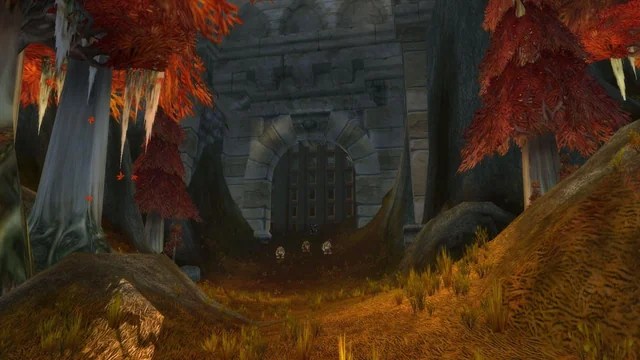
The Timbermaw Furbolgs are a Classic World of Warcraft reputation infamous for how grindy they were to max out. Players had to kill thousands of antagonistic Furbolgs in Winterspring and Felwood for anywhere from 5 to 25 reputation per kill, depending on the enemy, in order to enter Timbermaw Hold, a cave network that connected Felwood to Winterspring and Moonglade. Consider WoW reputations take 42,000 Experience to get from 0/3000 Neutral to Exalted, that’s a lot of killing! Yet, saddled away in the Kalimdor zone, Aszhara, stood three furbolgs defiantly guarding a massive gate of iron nestled in a colossal stone wall. Unfortunately, there’s not much else to say here: whatever plans the WoW development team had for this ancient entrance is lost to time, though former WoW developer John Staats believes it may have been an entrance to Hyjal at some point, and probably had nothing to do with Furbolgs. Modern WoW players on Season of Discovery hope to see the entrance repurposed into something new and exciting, but for now it remains a remnant of a bygone era.
7. The Upside-Down Sinners
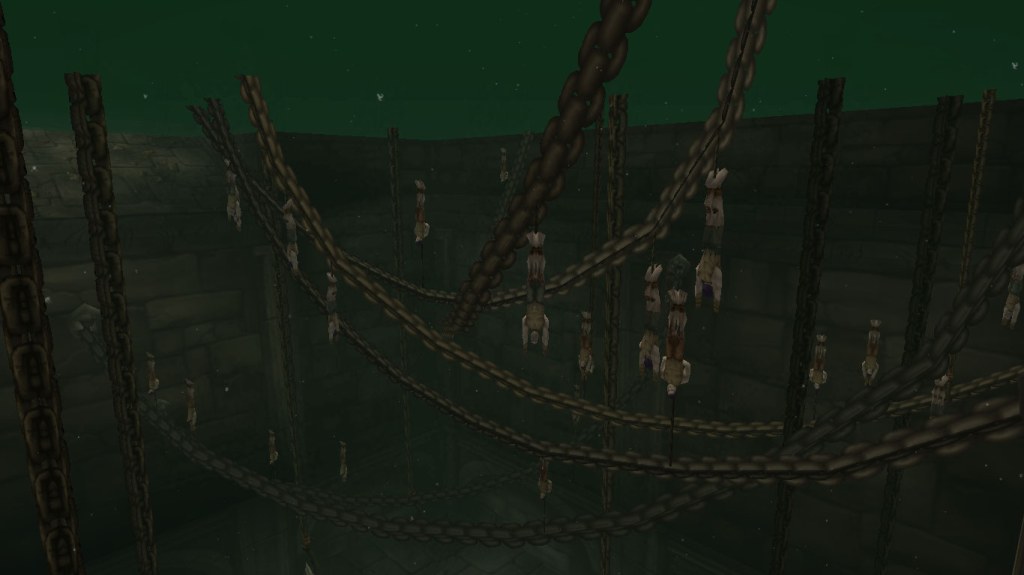
This area is one of World of Warcraft’s most well-known “secret” areas, thanks in large part to how easy it was to access. Located beneath the tower of Karazhan in Deadwind Pass, Classic players could clip into the area as a ghost, or by being resurrected on the other side by clipping into the walls of the tower. Inside they would find themselves in the Forgotten Crypt, filled with some generic tomb assets: spooky walls, cobwebs, and a giant watery pit filled with chained-up dead bodies floating upside down. Well, maybe not entirely generic. It’s a creepy visual, and the fact that it lays nestled away in some distant corner of WoW has made it a hotbed for rumors, with some claiming that it was sequestered away due to ESRB Rating concerns, though in a 2014 Community Post, former Blizzard Community Manager said, “Not sure I know the story on it but knowing our development processes back then there tended to be a lot more stuff made that we just didn’t use. I can’t imagine the game rating rumor is accurate, because if it was content we wanted to use we’d just take out the upside-down sinners or whatever the issue was and use it for whatever it was we wanted to do with that space.” In Retail World of Warcraft, the space has become fully explorable thanks to several updated to the Forgotten Crypts, including its inclusion in several World of Warcraft: Legion Class Hall storylines, as well as a recent community wide event involving a massive puzzle for a motorcycle mount: the Incognitro. In Season of Discovery, the Forgotten Crypts was reimagined as a max-level dungeon, complete with a gimmick revolving around light and darkness: players who fail to stay near a torchbearer will find themselves slowly killed by the encroaching darkness. A fitting reimagining for a place so mired in creepy WoW lore.
6. Mount Hyjal
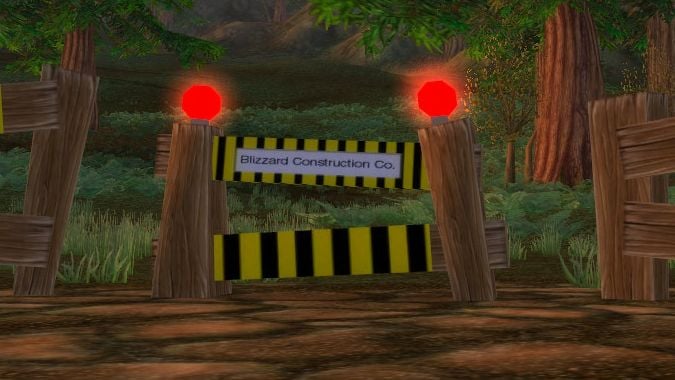
Mount Hyjal is a zone with major story ramifications in Warcraft III: it’s where the Night Elves lost their immortality, and where Archimonde the Defiler was killed by the combined forces of the Alliance and Horde. Yet, the zone was conspicuously absent on WoW’s release, with its entrance in Winterspring’s Darkwhisper Gorge blocked off. That didn’t stop intrepid explorers though. Boundary breaking players quickly found that by wall climbing up a certain route, they could enter an almost completely finished version of Hyjal, complete with these comical “Blizzard Construction Co.” barriers (pictured above). As for why the zone was missing, former WoW dev John Staats confirmed that, “It was going to be one of our zones planned for Vanilla until we realized we didn’t need anymore space to level.” It was repurposed as a leveling zone in World of Warcraft: Cataclysm, and was further integrated into the narrative during the 4.2 patch Rage of the Firelands.
5. The Ironforge Airfield
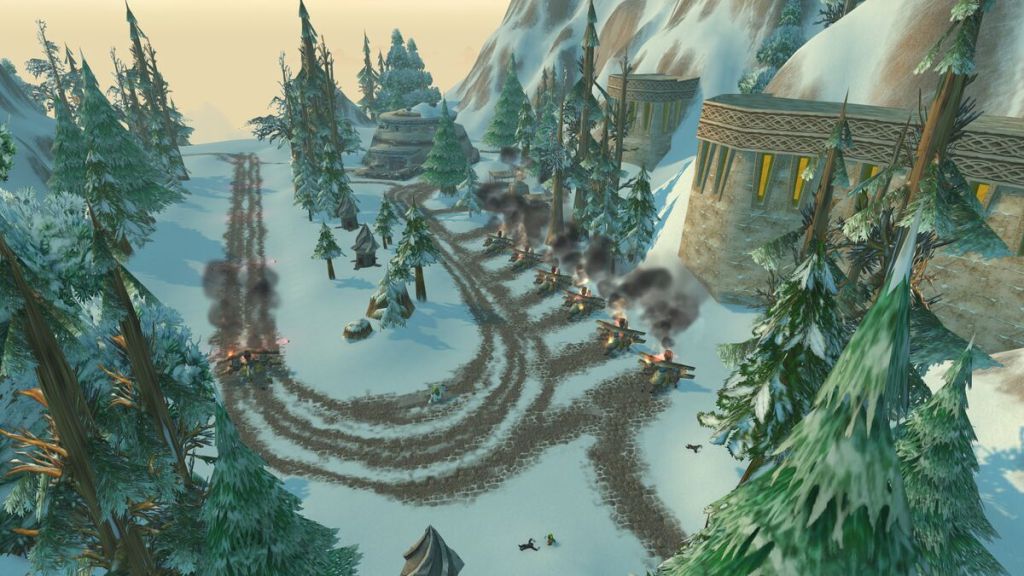
The Ironforge Airfield lacks some of the esoteric background of our previous entries, but it’s a fun one because it was easily accessed through some simply hiking along Dun Morogh’s mountains. Though its true purpose has never been explained (though there are many theories, including its scrapped role as a Gnome starting area, or that it may have played a role in the 1.9 patch “The Gates of Ahn’Qiraj” due to some quest text mentioning it for the Alliance War Effort), the Airfield was always tantalizingly close, hanging just out of reach of the flight paths Gryphons took over Dun Morogh. It would finally become accessible with the release of World of Warcraft: Cataclysm, where it was integrated into the Dwarf introductory story.
4. The Whispers of Lordaeron
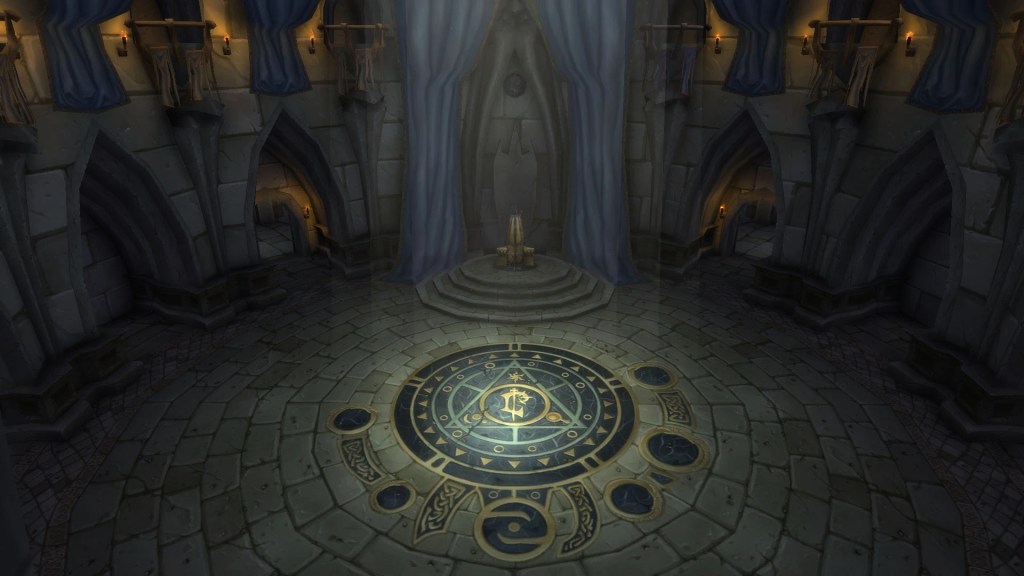
Anyone who played through Warcraft III remembers the Lordaeron throne room scene: a pale-skinned, white-haired Arthas marches through the streets of Lordaeron to the praise and fanfare of its loyal citizens. When he enters the throne room, Arthas whispers under his breath, “You no longer need to sacrifice for your people. You no longer need to bear the weight of your crown. I’ve taken care of everything.” He then proceeds to climb the steps to the throne, much to his father’s confusion, and stabs the king through the chest with Frostmourne, cementing his first towards becoming the dreaded Lich King. Fascinatingly, if players enter Undercity’s throne room and turn their Sound and Music settings down, and crank their Ambient Volume all the way to max, they’ll hear an ethereal recreation of this scene. Players entering the throne room will hear the fanfare of its citizens, and when they approach the throne, Arthas will say his monologue. Extra observant players will even notice the bloodstain on the floor: a cruel reminder of Arthas’ murder of the king of Lordaeron, and his own father.
3. The Original Dragon Isles

Classic maps of World of Warcraft showed a small collection of islands west of Quel’Thalas, though the zone itself wouldn’t even be visitable until 2007’s Burning Crusade expansion. So what were these mysterious islands? They were, in fact, the original Dragon Isles. Early in WoW’s development, the gameplay designers wanted to have an island dedicated to fighting the dragon aspects, complete with a raid and temples to Old Gods. Yet, Narrative Lead Chris Metzen pushed back against this idea, and chose to characterize the dragons as benevolent protectors of Azeroth in 2001’s Day of the Dragon. The island itself is famous for the nautilus temple (pictured above) that would have likely played host to a raid. Anything else is almost entirely left up to speculation, though the same kind of cut content as Hyjal, though it clearly happened much earlier in development. Thankfully, the idea of the Dragon Isles was eventually re-used in WoW’s 8th expansion, Dragonflight, though many of the original ideas were scrapped in the intervening years.
2. The Emerald Dream

Few zones have carried the same weight as the Emerald Dream for Warcraft fans. The early WoW developers had finished many of their zones and assets and even began naming some of them. Pictured above would have been the “Emerald Forest” though the actual story and narrative that would have driven the Emerald Dream remains a mystery, and the above zone never made it into the main game. There are several quest threads that touch on this zone scattered all throughout Classic WoW: the Druid class storyline touches on the danger the dream faces, and the Sunken Temple storyline deals with a bound dragon named Eranikus, whose soul you are attempting to rescue from being tortured in the dream. Yet, these threads all ended abruptly, and for years the Emerald Dream was put on the back burner as a narrative thread that the devs would occasionally pull on, but never fully engage. There were hints of a “nightmare” forming in the dream, but as far as Classic World of Warcraft was concerned, the Emerald Dream amounted to nothing. Thankfully, 2016’s Legion expansion would finally return to the Emerald Dream, allowing players to visit (and raid it) for the first time in WoW’s history; a subsequent storyline in Dragonflight saw players return to the Emerald Dream to defend the Night Elves’ new home in the final storyline of the expansion, though neither of these explorations of the dream approached the same level of scope and size that was hinted at by the early WoW development maps.
1. The Corrupted Ashbringer

The Corrupted Ashbringer is Classic World of Warcraft’s most iconic weapon. Some might argue it’s Sulfuras, Hand of Ragnaros or Thunderfury, Blessed Blade of the Windseeker and, yes, those weapons have been meme’d upon to the point of becoming sacrosanct within the community, but few weapons hold the level of reverence and intrigue that Corrupted Ashbringer holds. Dropped by the Four Horsemen in the 40-man Naxxramas raid, the weapon itself has a special property. If taken to the Scarlet Monastery Citadel dungeon, a special event plays where all the hostile NPC’s in the dungeon bow to you in reverence. I’ll spare you the massive lore dump (because it’s a lot!) but suffice it to say, a small questline unfolds where you’re directed to Outland to cleanse the blade and return it to its former glory. Unfortunately, Outland didn’t exist at this time in World of Warcraft. It wouldn’t exist until 2007’s Burning Crusade where, in an unfortunate twist, this storyline went nowhere. Instead, it was softly reintegrated into a comic book story where another major NPC, Darion Mograine, holds the Corrupted Ashbringer and the game just sort of ignores the one you’re holding in your hands to the dismay of players everywhere. It looked like the Corrupted Ashbringer could not be cleansed. Yet, thanks to the events of Wrath of the Lich King, the sword would eventually become cleansed (at least narratively) and, almost a decade later, would find its way into the hands of Retribution Paladins everywhere when they earned it as their Artifact weapon in the amazing World of Warcraft: Legion.
Though many of these mysteries would eventually be resolved in future expansions, it’s fascinating to look back at the original design intentions of WoW’s developers. More than anything, it’s amazing just how much they had planned to put into the game before ultimately paring back their designs to make the game more manageable. Regardless, here’s to another 20 years of WoW and another 20 years of mysteries, stories, and oddities to uncover.
——————————————————————————–
SAMPLE 2: Destiny 2 Writing Sample
DESTINY 2’s HERESY ACT: II RELEASES TO A BUGGY, BUT FUN, START
I imagine there exists an ancient pact between Bungie and some eldritch god that dictates that all of their games must be plagued with controversy in exchange for their having some of the tightest gameplay in all of the First Person Shooter genre. After all, I can think of no other reason why it would appear, after all this time, that Bungie’s Destiny 2 continues to be plagued by issues as it celebrates its 10th Birthday.
The game’s most recent patch, Heresy: Act II released on March 11th, 2025 and was immediately met with a fun, but major, issue. The game’s upcoming “Rite of the Nine” game mode, which sees players complete Challenge Mode dungeons for higher level rewards and cosmetics, was pushed earlier than intended, allowing players to load into incomplete versions of these re-tuned dungeons, where they earned broken, unmodeled, and untextured rewards with placeholder icons and impossible perk combinations.
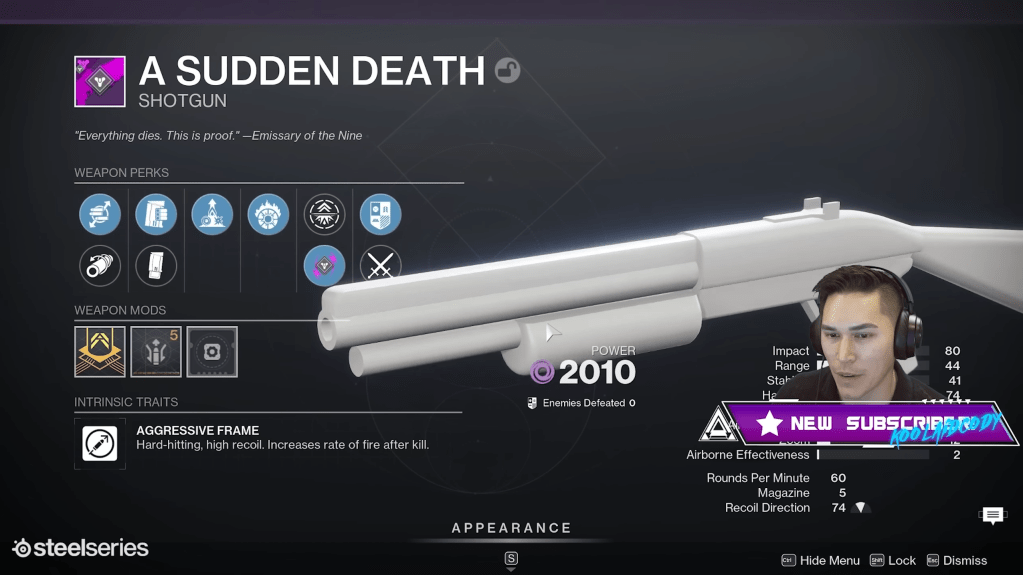
Bungie was quick to patch the issue and released a statement explaining what happened. According to their This Week in Destiny post “As for how this happened, we’ll keep it short and sweet. Some of the earliest iterations of our Rite of the Nine activities snuck their way into Update 8.2.5. Most of what was seen was placeholder: weapon rewards all featured temporary art and fake perk rolls, the user interface is not what we’re planning to ship, and difficulty options don’t have the tuning passes that we’ve planned for Explorer, Eternity, and Ultimatum modes.
“As a final note, for all of you who got your hands on weapon rewards early: we won’t be removing them from your inventory. When Rite of the Nine ships, perk rolls will be updated across the board to prevent some rule-breaking combinations (Incandescent or Chill Clip on a Void Shotgun, for example), but you’ll still retain these rewards on launch day.”

Thankfully, the patch’s narrative seems entirely unaffected by the chaos surrounded Rites of the Nine. The story sees players delve deeper into Oryx’s Dreadnaught to try and recover the Echo of the Navigator, an ancient remanent of The Final Shape’s Witness enemy in the aftermath of this year’s expansion story. Its been a rocky year post-Final Shape for Destiny 2 and Bungie, and it’s nice to see that the story side of things seem to be shaping up in preparation for next year’s Codename: Frontiers expansion, which will hopefully help Destiny 2 break away from the monotonous seasonal patch cadence that has players feeling burnt out on the franchise.
——————————————————————————–
I hope you enjoyed these writing samples; I feel they clearly show I can capably, and quickly, create quality content.
 ALEXANDER M. ABREU